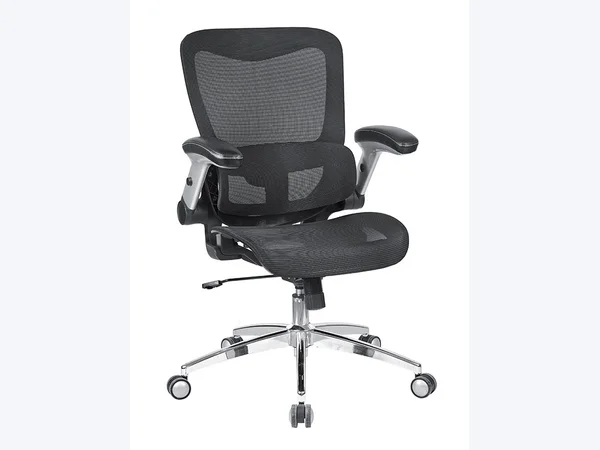
Drop-ship and marketplace orders changed how we design a chair. In a wholesale model, the chair sits in your warehouse and a person checks it before it goes to a customer. In drop-ship, the carton we pack is the box the end customer opens — there is no second look. That single fact drives the whole design of an e-commerce office chair or gaming chair.
Ships in its own container
Big marketplaces push suppliers toward packaging that ships without an overbox. Amazon's programme — now called Ships in Product Packaging, with the well-known Frustration-Free Packaging (FFP) and Ships in Own Container (SIOC) tiers — is the clearest example. SIOC means the product's own carton is strong enough to go through the parcel network alone, no extra Amazon box. Since August 2019, items over about 20 lb or 18×14×8 inches are expected to be designed and certified ready-to-ship, which covers essentially every chair. A chair that needs an overbox is paying twice for packaging and adding a step that can be charged back.
The 120-second rule and what it means for a chair
FFP also sets a customer-experience bar: the product should come out of its packaging within about 120 seconds, with no plastic clamshells, blister packs, peanuts or wire ties, and Tier 1 wants curbside-recyclable materials. For a chair that is a real design constraint. It pushes us toward moulded pulp or EPE blocks instead of loose foam, toward tool-light assembly, and toward a parts layout where the customer is not fighting twist-ties for ten minutes. The unboxing is part of the review now, and a frustrating one shows up in your star rating.
The hardware bag is where ratings die
The single most common one-star review on a flat-pack chair is not "it broke" — it is "a screw was missing" or "the holes did not line up." On a drop-ship chair there is no warehouse to catch that, so the fix has to happen on our line. We pre-count and seal the hardware bag, label each fastener to its step, and where we can we pre-thread the high-risk joints so the customer is clipping and tightening, not hunting for the right bolt. We also put one spare of each small fastener in the bag — a few cents that pre-empts a return for a lost screw. None of this is glamorous, and it adds a step to the pack. It is also the difference between a four-star average and a three-star one, and on a marketplace that gap decides whether the listing survives.
The trade-off: assembly vs cube
Here is the genuine tension in a drop-ship chair. A fully assembled chair is the best customer experience — roll it out and sit down — but it cubes badly, ships expensive, and is hard to fit in a single sensible parcel. A flat-packed chair ships cheap and dense but pushes assembly onto a consumer who may not own an Allen key. The drop-ship sweet spot is usually a partly built chair: seat and back pre-joined, base and casters to clip on by hand, gas lift drop-in, no tools or one tool. It is not the cheapest cube and it is not the easiest assembly — it is the version that arrives intact and earns four stars instead of three. We tune that split per model with you.
How we build it
We design the single carton for the parcel network, validate it against an ISTA 3A transit profile, and keep the assembly to hand-tight or one tool. SIOC-style transit testing can be arranged per order; we do not claim a marketplace certification we have not run for your exact pack. For colour and brand, this slots straight into our ODM / OEM flow — your logo on the carton, your insert card, your assembly sheet.
If you are launching a chair on a marketplace, send us the listing dimensions, the channel and your target unbox time, and we will design a single-parcel pack and quote the transit option. Reach us through the contact form or [email protected].