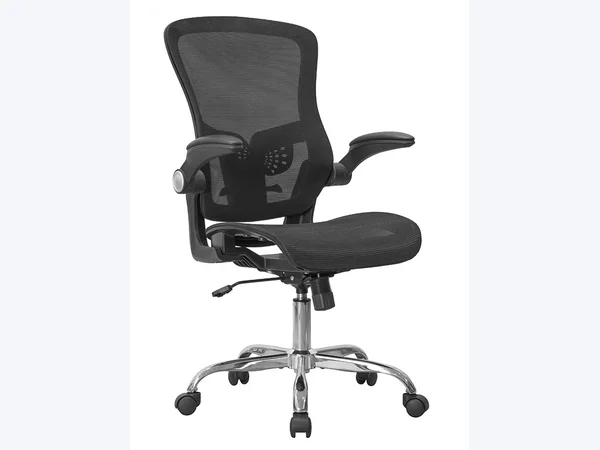
You can build a chair that passes every durability test and still get charged back at the retailer's gate because the packaging is wrong. Big-box and club stores buy a pallet, not a chair — they want goods that go from the truck to the sales floor without anyone opening a box. For our office and gaming chair programmes, the pack spec is part of the quote, not an afterthought.
The pallet is the product
Club stores like Costco and Sam's Club work to a tight standard. The pallet footprint follows the 48-by-40 inch GMA spec — often built to about 47-by-39 inches of actual product so nothing overhangs and destabilises the stack. The whole load has to be a "floor-ready shipper" with no lid, because removing a lid is a touch their no-touch supply chain does not allow. And it has to be fully stackable: club aisles double-stack pallets, so the bottom load carries a second pallet's weight without crushing. A typical pallet load is capped around 2,500 lb. A chair carton that fails any of these does not get fixed at the store; it gets a chargeback.
Retail-ready means it sells itself
Shelf-ready or retail-ready packaging (SRP/RRP) means the case is designed to go straight onto the shelf or floor and still sell. Club buyers apply a blunt test people call the five-by-five rule: from five feet away and within five seconds, does the pack tell a shopper what it is and why they want it? A plain brown master carton fails that. A chair pack that shows the product, the key feature and the brand passes. This is not marketing fluff — it is a buying condition.
The footprint is a constraint, not a suggestion
The 48-by-40 inch GMA pallet sounds generous until you try to fit chairs onto it without overhang. A few millimetres of carton sticking past the pallet edge is what snags on racking and topples a double-stack, so club programmes police it hard. For us that drives the carton dimensions backward from the pallet: we size the chair box so a whole-number count tiles the 47-by-39 inch usable footprint with no overhang and no wasted gap, then check the stack height against the door and the second-pallet load. A chair that packs into a tidy 5-up or 6-up layer is worth more to a club buyer than one that is two percent cheaper but leaves a ragged, unstable pallet. We design the box to the pallet, not the pallet to the box.
The chargeback is the real cost
Here is why this is not a detail to leave for later. Non-compliant club-store packaging commonly draws a chargeback of around two percent of the vendor payment, deducted straight off your invoice — and in the worst case the item gets deleted from the system entirely. Two percent on a container of chairs is more than the cost of getting the pack right the first time. We have watched a buyer win the order on price and lose it on a pallet that would not double-stack.
The trade-off: branded floor-ready vs cheap brown box
The honest tension is cost. A printed floor-ready shipper with the right corner strength and a header card costs more per unit than a plain export carton, and it takes a little more CBM. For a club-store or big-box programme that cost is not optional — the cheap box gets charged back, and the chargeback dwarfs the saving. For a plain B2B wholesale order going into a distributor's warehouse, the brown master carton is the right call and the floor-ready pack is wasted money. Tell us the destination and we pack for it; we will not gold-plate a warehouse order.
If your goods are going into a club or big-box programme, send us the retailer and we will quote a pallet and carton that meets their floor-ready spec — and flag the chargeback rules before they bite. Start at our contact page or email [email protected]. Our audit and compliance page covers how this fits the wider retail programme.