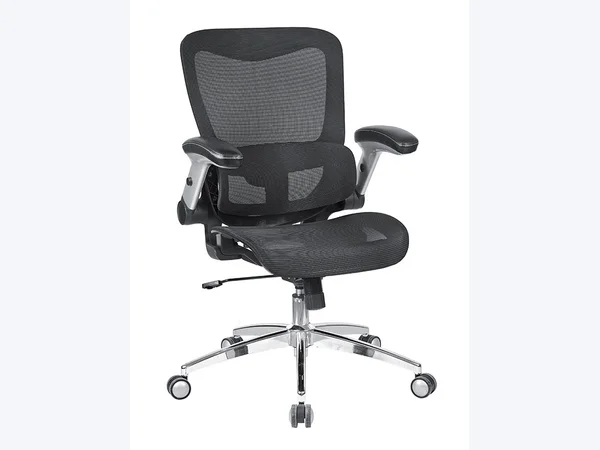
Every chair programme we run into US retail eventually hits the same email: "what is your Prop 65 position?" Buyers treat it as a compliance scare; sellers treat it as a sticker. Both readings are wrong in useful ways. California's Proposition 65 is a labelling law, not a product ban, and the decision it forces — label, or test your way out of the label — is a commercial one you should make on purpose. Here is how we walk mesh-chair and gaming-chair buyers through it.
What the law actually is
Prop 65 requires a "clear and reasonable warning" before exposing Californians to any chemical on the state's list — roughly 900 substances, updated continually. It applies to businesses with ten or more employees selling into California, which is essentially every importer we work with. Two features make it unlike anything else in your compliance stack. First, there is no pre-market approval and no agency inspecting your chair; it runs on the honour system until it doesn't. Second, enforcement is largely private: law firms send 60-day notices on behalf of "citizen enforcers," and penalties can reach $2,500 per violation per day. Furniture is a regular target because it is full of the listed usual suspects.
The chemicals that actually show up in a chair
You do not need to read all 900 entries. On seating, four families do almost all the damage. Formaldehyde, from composite-wood parts — plywood seat pans, particleboard in arm cores. Phthalates such as DEHP and DINP, in flexible PVC and some cheap PU upholstery and wire insulation. Lead, in brass fittings, recycled-steel hardware and certain pigments. And flame-retardant chemicals like TDCPP, which older foam formulations used. Notice the pattern: every one of these is a material choice made at the factory, months before the chair reaches a port. That is why the Prop 65 conversation belongs at the quotation stage, not in a panic after a 60-day notice arrives.
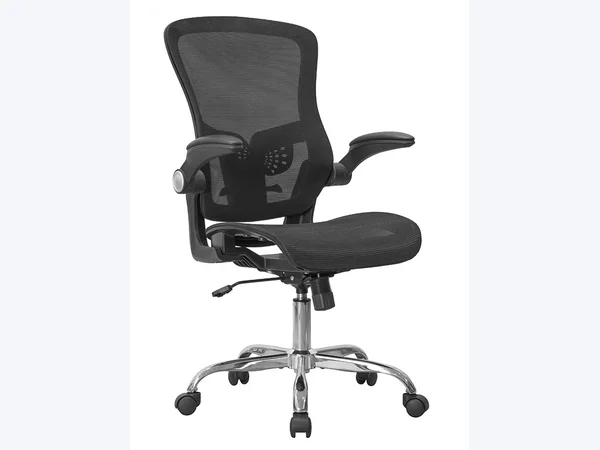
What the label has to say — and the short-form change
The safe-harbor warning is specific: the yellow-triangle symbol, the word WARNING, and text naming at least one listed chemical and its endpoint — "can expose you to chemicals including DEHP, which is known to the State of California to cause cancer," with a pointer to the P65Warnings website. For years sellers leaned on a short-form warning that named nothing. That door is closing: the amendment that took effect in 2025 requires even the short-form text to name a chemical, with a transition window running through the end of 2027. The practical upshot: the vague catch-all sticker you copied from a competitor's carton is on its way to non-compliant. The label also has to appear where the buying decision happens — which for e-commerce means on the listing page, not just on a carton the customer sees after paying.
The retail reality
Here is what the statute does not tell you. Big-box and marketplace channels push the whole question down to the supplier of record. Some retailers accept a blanket warning on everything; others — and several large ones — reject blanket labels because a wall of WARNING stickers in a club aisle alarms shoppers, and they will ask you for the test data that justifies removing it. Meanwhile the plaintiff firms buy products off shelves and send them to labs, and a chair with a missing or malformed warning is low-hanging fruit. The settlements we hear about from buyers run far past what the testing would have cost.
The trade-off: blanket label vs testing out of it
So the real decision is binary. Option one: label everything with a compliant, chemical-named warning. It costs almost nothing, it is legally safe, and it can cost you conversion — some shoppers walk away from a cancer warning on a chair, and some retail buyers will not range the SKU. Option two: spend on materials and testing so no listed chemical exceeds the safe-harbor exposure level, and ship with no warning at all. That means phthalate-free PU, TSCA Title VI compliant boards, verified hardware — and lab reports per material, per order. The testing is a few hundred dollars a material; the clean listing is worth more than that on any volume SKU. For a low-volume or price-led line, the label is the rational choice. We will tell you which side of the line your chair sits on rather than sell you testing you do not need.
The paperwork your buyer will ask for
If you supply a big-box or marketplace channel, the Prop 65 question arrives as a vendor-agreement clause, not a friendly email. Retailers push the liability down the chain: you certify your products comply, you indemnify them if a 60-day notice lands, and some ask for the supporting test data on file before the first PO. So treat the documentation like you treat your GCC file — a report per material, per supplier lot, tied to the PO it shipped under. The trap is drift: the chair that passed in January quietly picks up a cheaper PU from a sub-supplier in August, and your January report now proves nothing. We lock the material suppliers named in the test reports into the build sheet, and a substitution triggers a re-test conversation with you instead of a silent swap. That discipline costs a little flexibility on our side. It is also the only version of "we have the reports" that survives a plaintiff lawyer's lab.
How we handle it on the line
We build with the materials decision in front of you: the foam, leather-alternative and board options are quoted with their Prop 65 implications stated, and supporting chemical testing can be arranged per order through third-party labs — we do not print a warning, or omit one, until you have chosen a strategy. This slots into the same retail compliance programme that covers your GCC and retailer audits, and the OEM / ODM workflow books the lab time at the sample stage so the answer exists before the carton art is printed.
Send us the target retailer, the channel and the materials in your spec, and we will map your Prop 65 exposure and quote both paths — label or test. Reach the export desk through the contact form or [email protected].